Bones and muscles
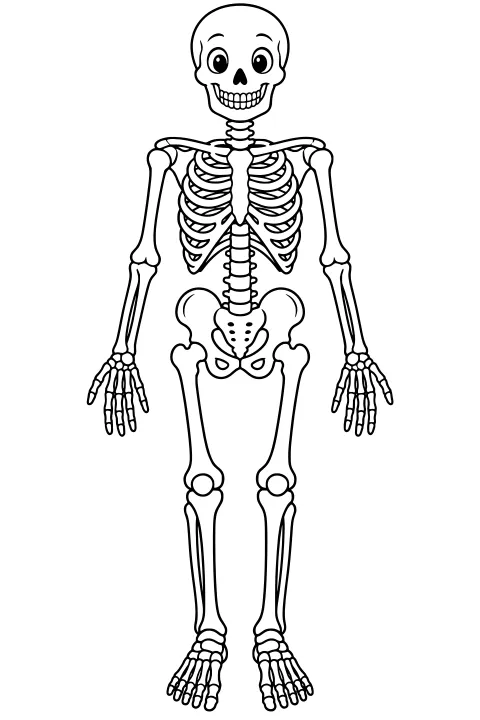
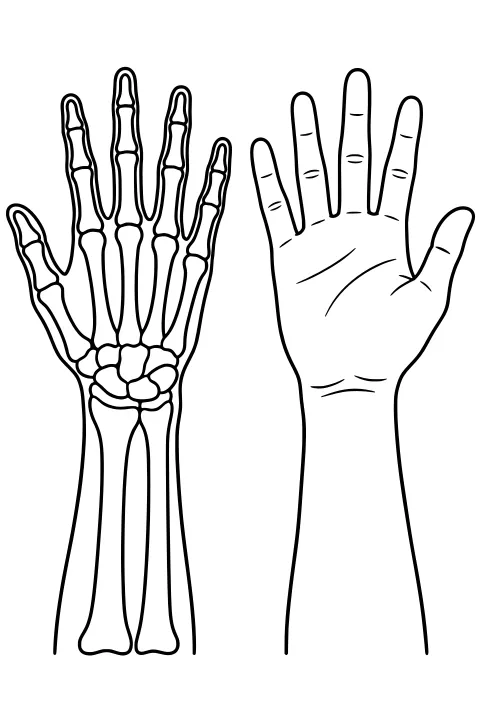
The skeleton stands in front view with its skull, ribs, spine and arm and leg bones, and the bones of a hand are drawn beside the outline of the same hand with its fingers spread.
These human body pages turn science lessons into coloring: a full skeleton, a realistic heart with its big blood vessels, lungs with branching airways, the brain and spinal cord, the path food takes through the digestive system, the main muscles and cutaways of a tooth, an eye and an ear. None of the pages has labels, so children can name the parts themselves or copy the names from a book.
Smaller things are here too, from red and white blood cells to an animal cell and a DNA double helix, along with friendly pages about the five senses, healthy habits, washing hands, a visit to the doctor and life stages from baby to grandparent. Start with the six picks below or browse every human body page, then download the free PDF.
Printable pack: 12 pictures in one PDF
A cover page lists every picture, then one per page. 762 KB, US Letter (Fit to page on A4). All packs
The skeleton stands in front view with its skull, ribs, spine and arm and leg bones, and the bones of a hand are drawn beside the outline of the same hand with its fingers spread.
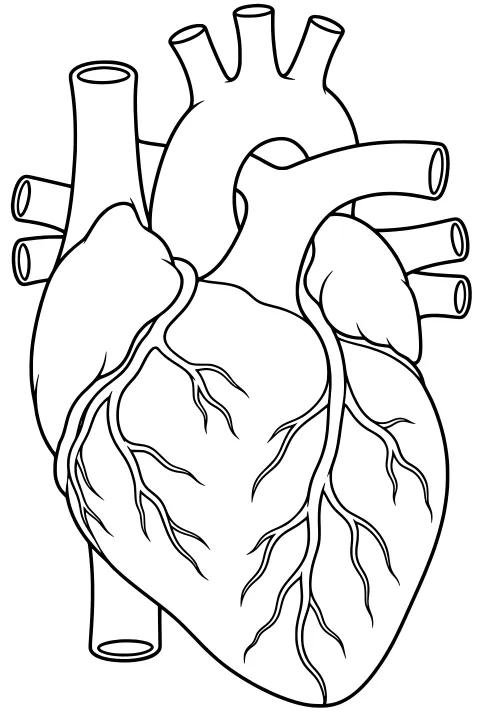
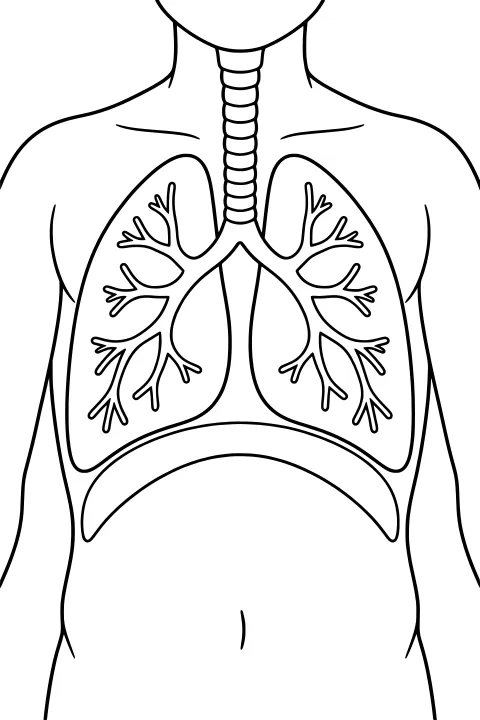
The heart shows its chambers and the big blood vessels on top, and the lungs sit inside the outline of a chest with the windpipe and branching airways leading into them.
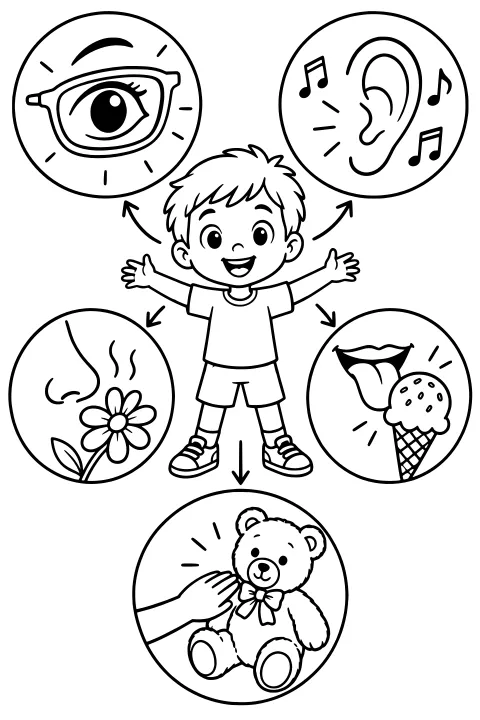
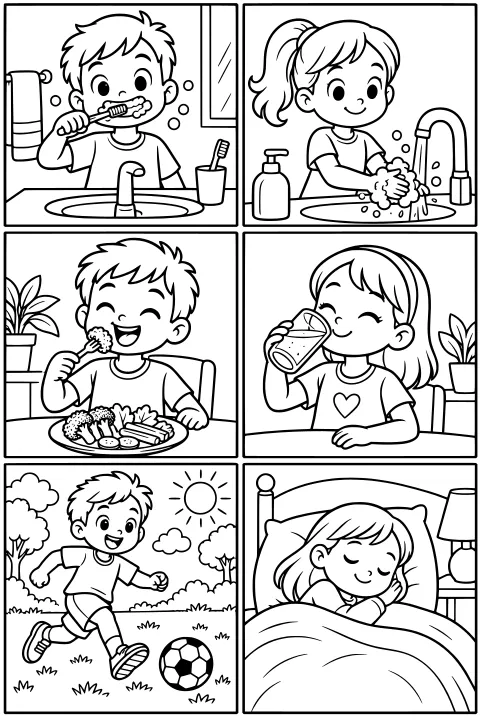
A child stands among circles for the five senses, from an eye with glasses to a hand touching a teddy bear, and six panels show healthy habits from brushing teeth to a good night of sleep.
Showing 1–24 of 24 designs. Open a preview to compare details, then download the individual PDF.
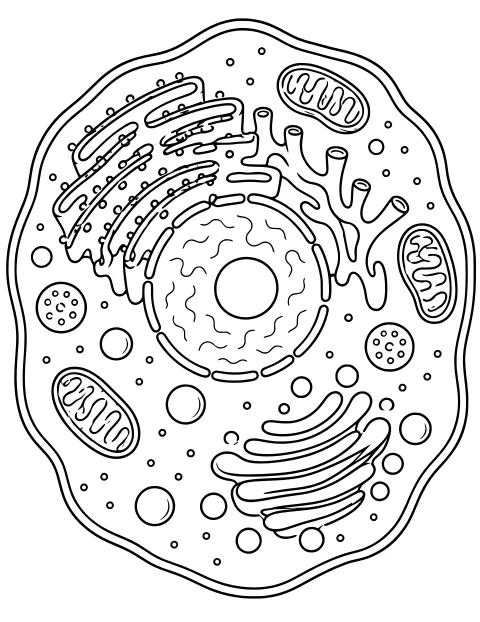
A large round nucleus sits at the center of an outlined animal cell, surrounded by folded endoplasmic reticulum, a stacked Golgi apparatus, mitochondria, circles, and scattered dots.
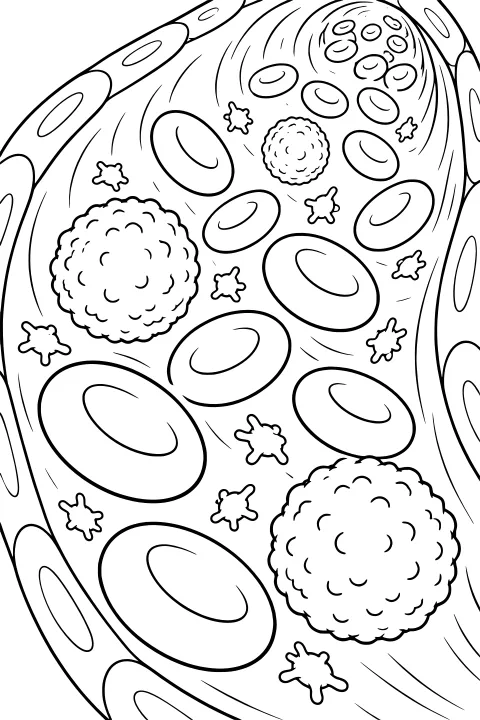
Oval, round, and small star-shaped blood cells flow through a curving blood vessel. The vessel walls frame the scene, while motion lines suggest movement along the channel.
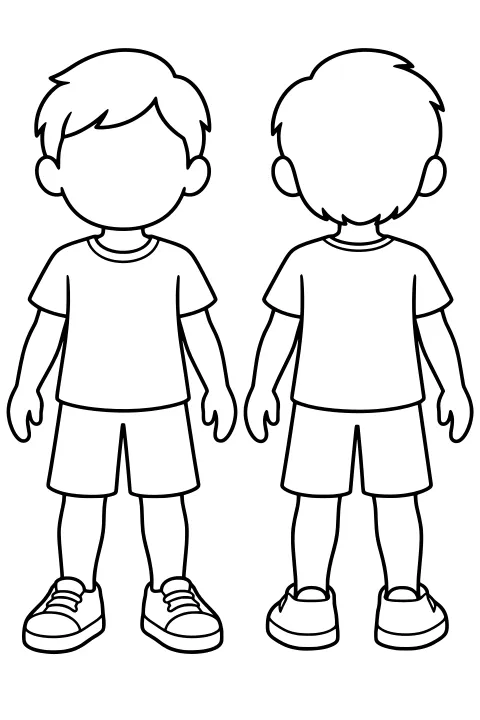
Front and back views of a body outline stand side by side, wearing a T-shirt, shorts, and sneakers. Simple details include short hair, ears, hands, laces, and clothing seams.
An open hand and forearm appear beside a skeletal hand and forearm, showing finger bones, clustered wrist bones, long forearm bones, and curved palm creases.
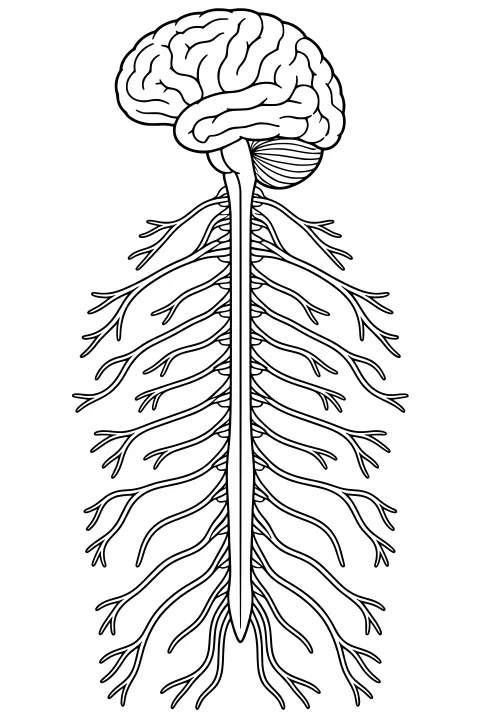
A side-view brain connects to a long spinal cord, with branching nerves spreading outward along both sides. Curved brain folds and fine striped lines distinguish the upper structures.
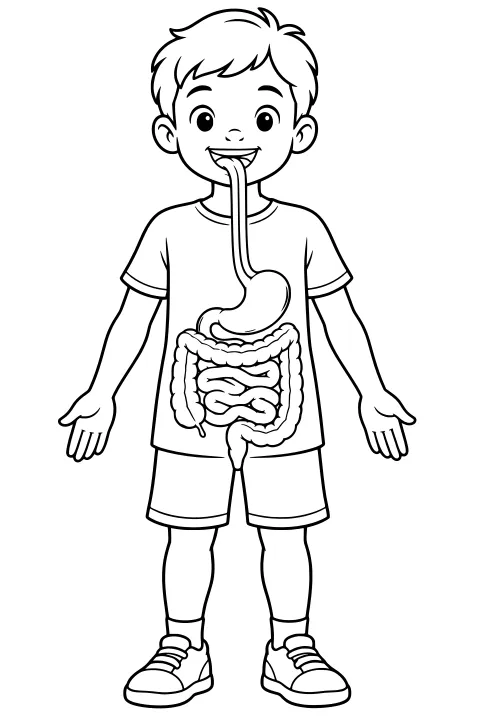
A front-facing digestive system diagram places the esophagus, stomach, and coiled intestines over a clothed torso. The surrounding outline includes short hair, a T-shirt, shorts, hands, legs, and sneakers.
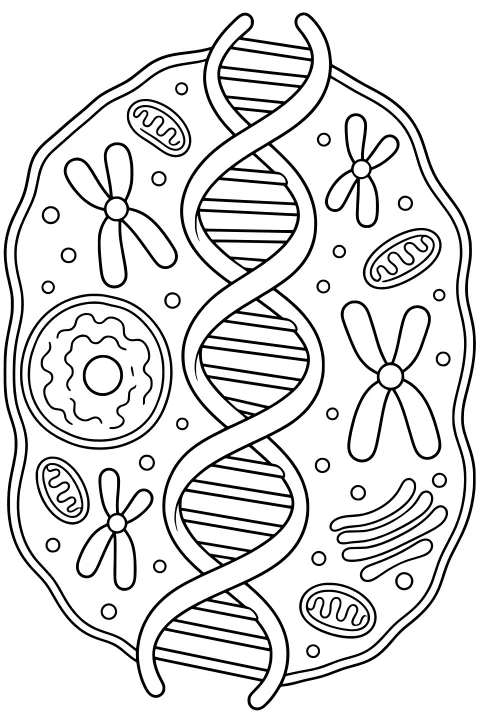
A large DNA double helix twists through a rounded cell outline, surrounded by a nucleus, mitochondria, chromosome-like forms, small circles, and stacked curved membranes.
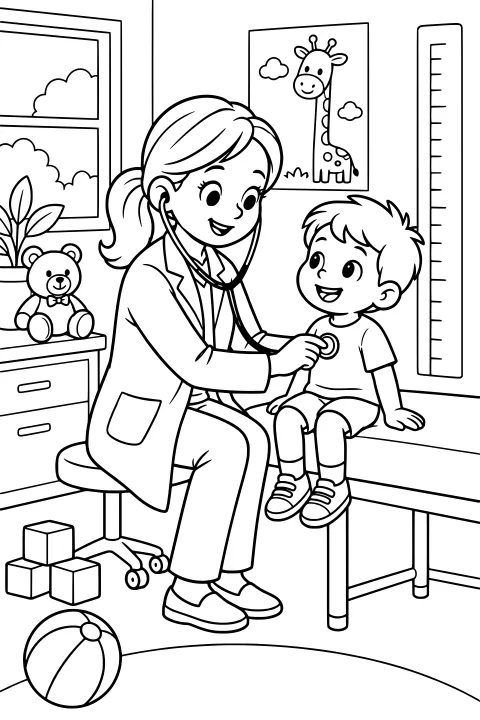
The doctor listens to a heartbeat with a stethoscope beside an exam table in a clinic room. A height chart, giraffe picture, teddy bear, blocks, beach ball, plant, and window fill the setting.
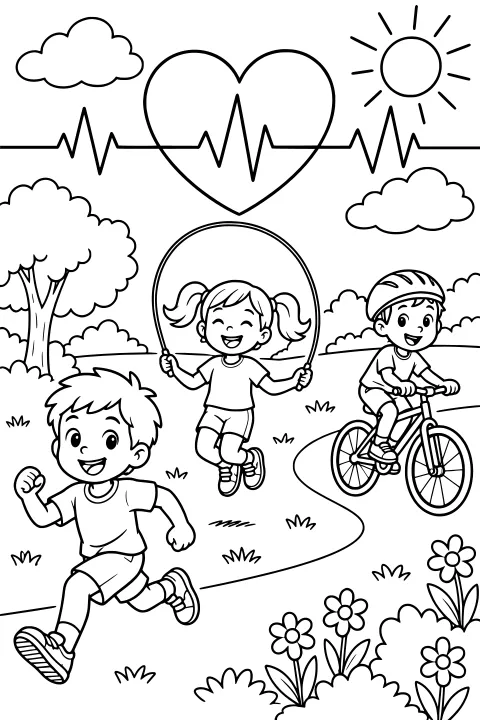
Running, jumping rope, and riding a bicycle fill an outdoor scene with a winding path, trees, flowers, clouds, and sunshine. A large heart and pulse line appear above the activities.
Arrows connect an outstretched central pose to circular scenes representing sight, hearing, smell, taste, and touch with familiar objects and body parts.
A grid of framed scenes presents healthy habits at a sink, table, outdoors, and in bed: brushing teeth, washing hands, eating vegetables, drinking from a glass, running with a soccer ball, and sleeping.
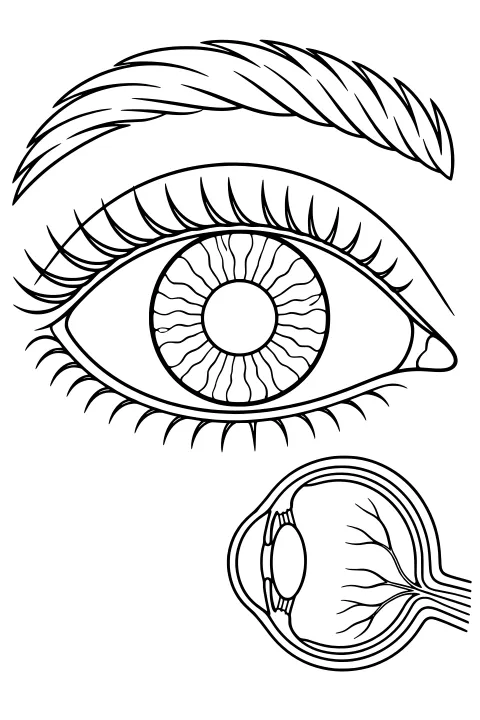
A large close-up of a human eye includes a curved eyebrow, upper and lower lashes, a patterned iris, and a smaller side-view cross-section with internal structures.
A detailed human heart fills the page, with large vessels rising from the top and branching surface vessels extending across the rounded lower sections.
A human skeleton stands upright against a blank background, with large round eyes in the skull and clearly outlined ribs, spine, pelvis, hands, knees, and feet.
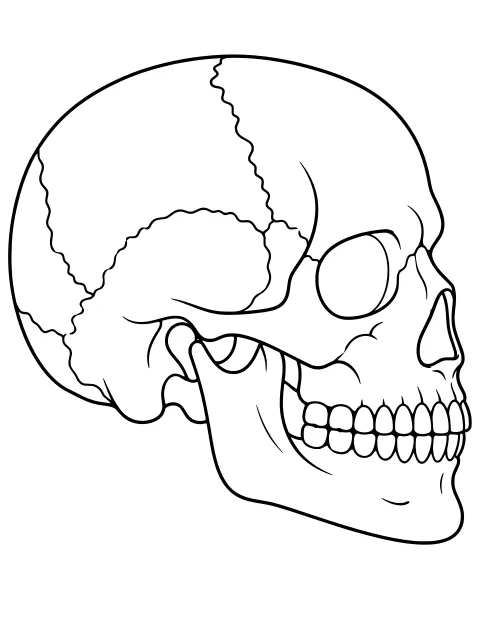
A human skull is shown in side view against a plain background, with a rounded cranium, wavy suture lines, a large eye socket, nasal opening, cheekbone, jaw, and rows of outlined teeth.
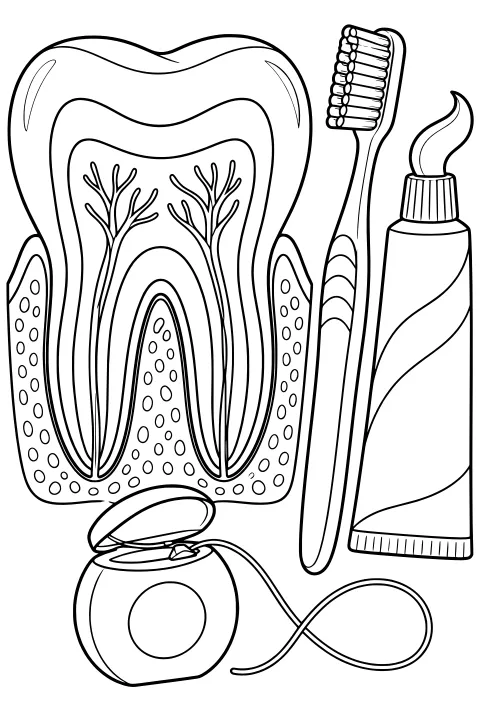
A large cutaway tooth reveals curved inner layers and branching lines within its roots. A toothbrush and toothpaste tube stand beside it, while an open floss case rests below.
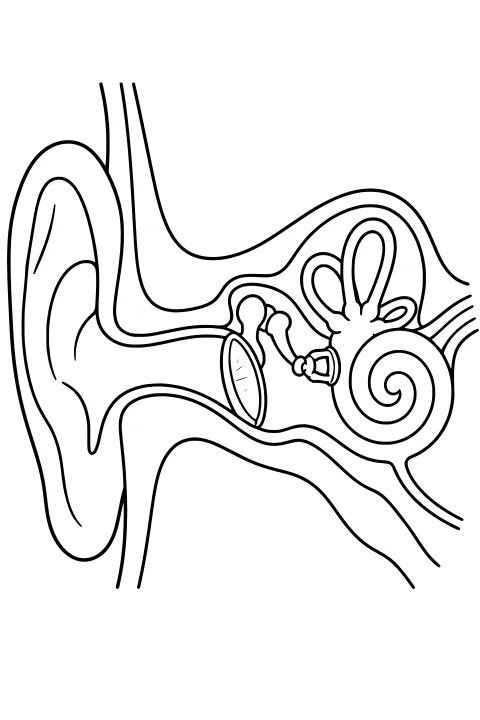
A cutaway view of an ear reveals the outer ear, winding canal, eardrum, small middle-ear bones, spiral cochlea, and looping inner-ear structures.
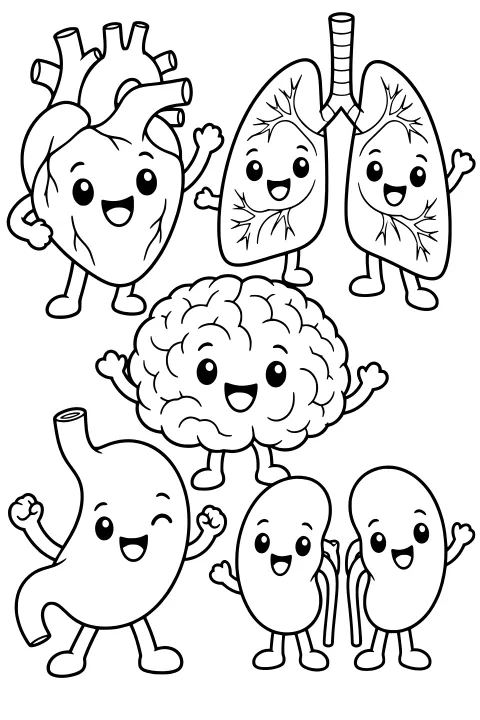
A cheerful group of cartoon organs with faces, arms, and legs includes a heart, lungs, brain, stomach, and kidneys. The figures wave while lung branches, brain folds, and major vessels provide extra detail.
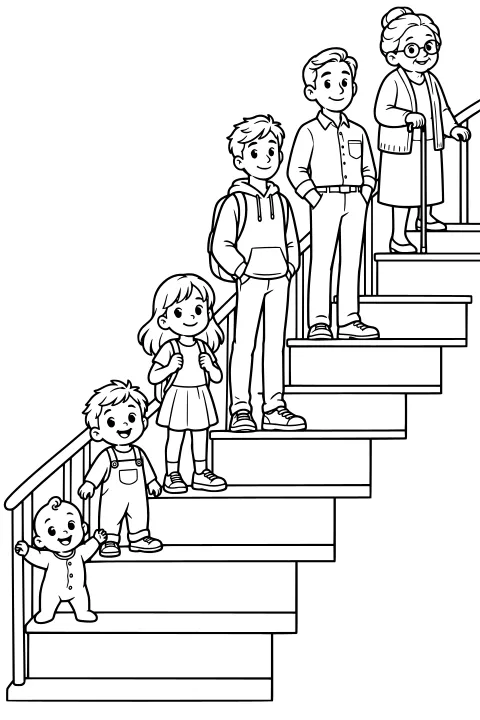
Life stages progress upward along a staircase, with changing height, clothing, hairstyles, and accessories. Backpacks, overalls, a collared outfit, glasses, a cane, and railings distinguish the sequence.
An upper torso reveals the lungs, branching airways, ringed windpipe, and curved diaphragm. Bold outlines separate the main breathing structures and their smaller branches.
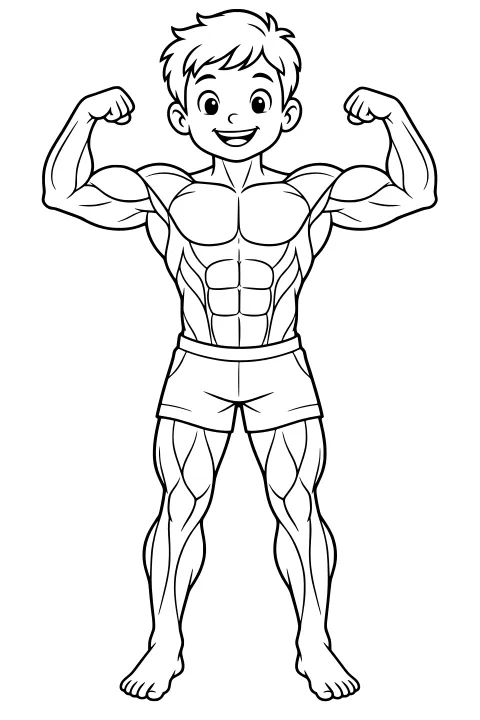
A front-facing body flexes raised arms, with outlined muscles across the shoulders, chest, abdomen, arms, and legs. Short hair and plain shorts complete the centered pose.
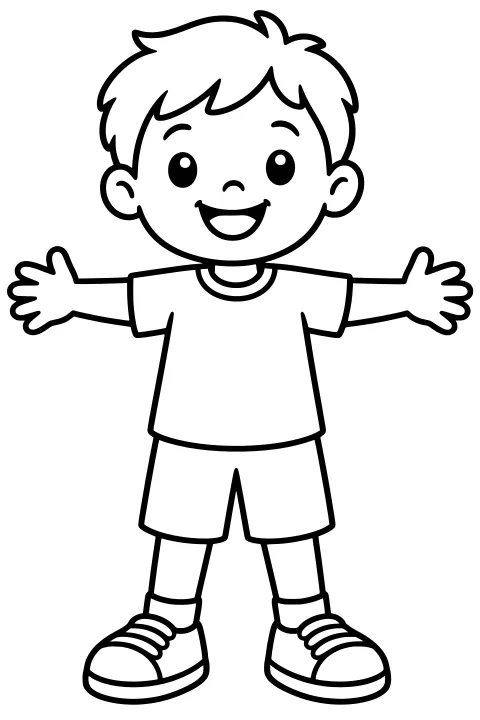
A simple body stands front-facing with arms extended, showing a face, hair, hands, legs, and feet, along with a shirt, shorts, socks, and lace-up shoes.
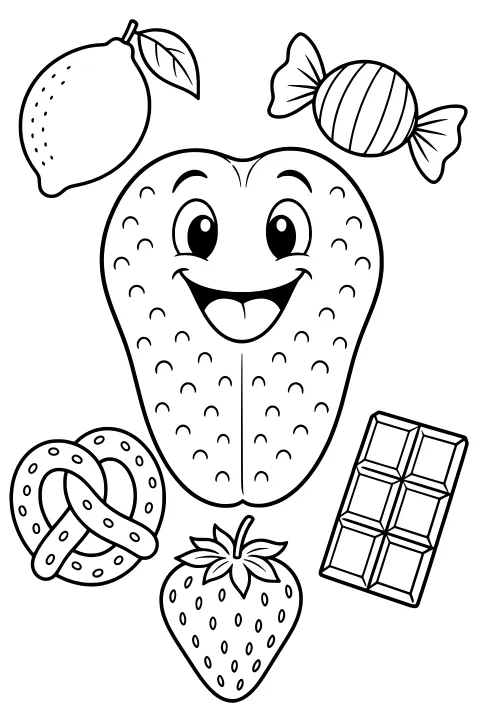
A large tongue with wide eyes and an open mouth fills the center, surrounded by a lemon, wrapped candy, pretzel, strawberry, and segmented chocolate bar.
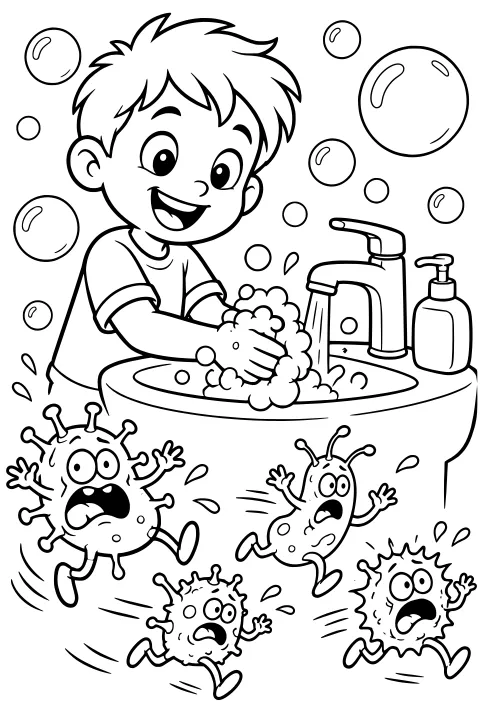
Hands scrub together under a running faucet in a sink filled with soap bubbles. A pump bottle sits beside the faucet while cartoon germs scatter below the basin.
Print the skeleton or the heart, look up the names of the main parts in a book, and write them on the page with arrows. Color each part in a different color to make a study sheet.
On the five senses page, color each circle and write one thing you like to see, hear, smell, taste and touch beside it.
Color the healthy habits panels, cut them apart and stick one on each day of a calendar as a reminder to brush, wash, eat well, drink water, play and sleep.
Each picture is an individual vector PDF. Print on US Letter, or choose “Fit to page” for A4. Try one copy first to check the margins.
Explore another collection: Community Helpers coloring pages · School coloring pages · Feelings & Emotions coloring pages.
The pages show a realistic heart with its blood vessels, lungs with the windpipe and airways, the brain with the spinal cord and nerves, and the digestive system inside the outline of a child in a T-shirt, from the mouth down to the intestines.
See: Human Heart · Lungs and Breathing · Brain and Spinal Cord · Digestive System Diagram
No. Every page is drawn without labels, words or numbers, so children can name the parts themselves. A teacher can add labels with arrows, or the pages can become a quiz by writing the names on sticky notes and matching them to the parts.
The Simple Body Parts page shows a smiling child with arms out drawn with extra thick lines, the kawaii organs page gives a heart, lungs, brain, stomach and kidneys smiling faces, and a child washes hands while cartoon germs run away.
See: Simple Body Parts · Kawaii Organs · Washing Hands and Germs
Free to print? Letter or A4? Classroom use? See the FAQ.