Shapes that bulge and sink
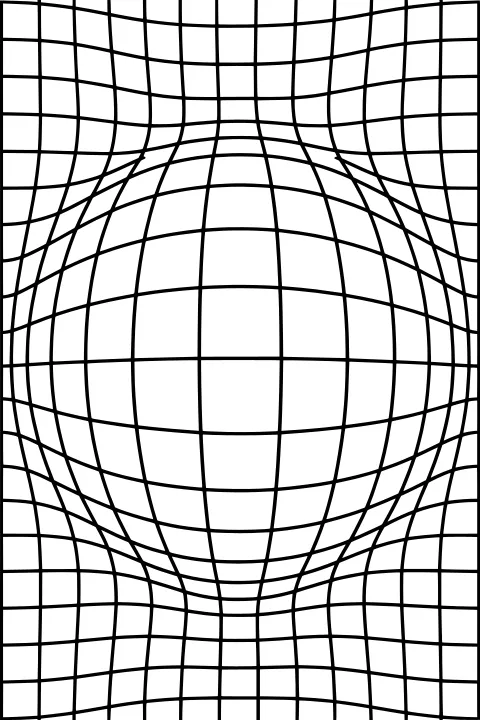
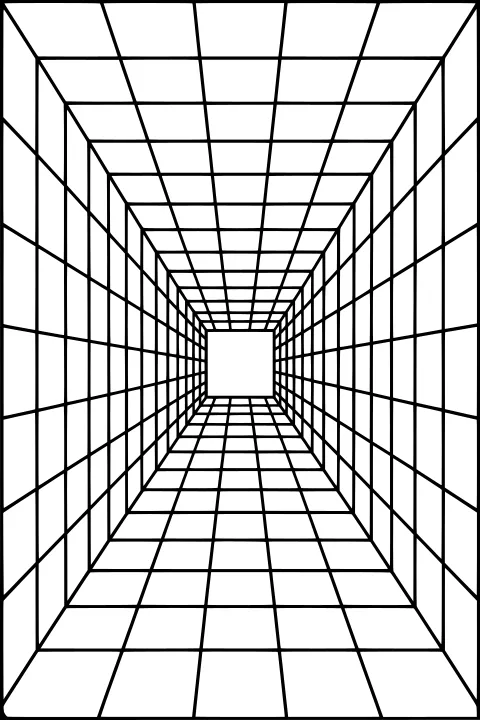
A checkerboard grid swells into a sphere in the middle of the page, and a square tunnel of checkered tiles shrinks toward a small square in the center.
Op art uses nothing but lines and shapes to trick the eye. On these pages a checkerboard bulges into a sphere, a checkered tunnel pulls the eye toward its center, wavy stripes seem to ripple, rings of teardrops appear to turn, and a hand looks raised off the page because of the curved lines inside it. The impossible triangle, trident, ring and never-ending staircase are shapes that could not exist in real life.
Classic puzzles are here too, from the vase that is also two faces to the cafe wall whose straight rows look tilted and the duck that is also a rabbit, plus op art hearts, butterflies, cats, fish, a flower, a zebra, an ocean scene and a mandala. Start with the six picks below or browse every op art page, then download the free PDF.
Printable pack: 12 pictures in one PDF
A cover page lists every picture, then one per page. 600 KB, US Letter (Fit to page on A4). All packs
A checkerboard grid swells into a sphere in the middle of the page, and a square tunnel of checkered tiles shrinks toward a small square in the center.
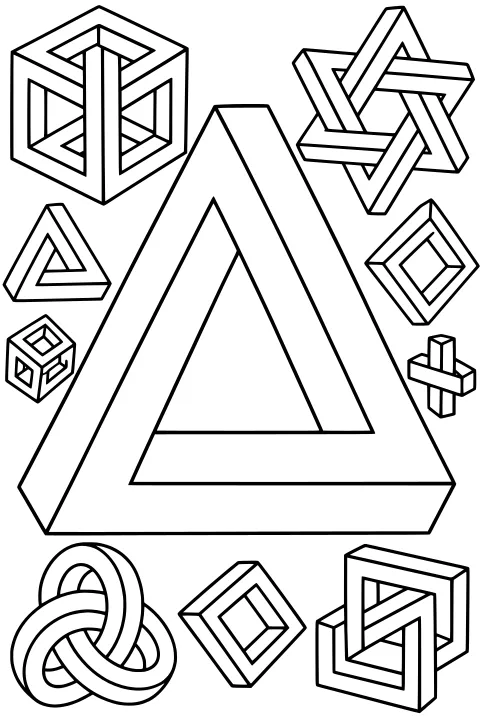
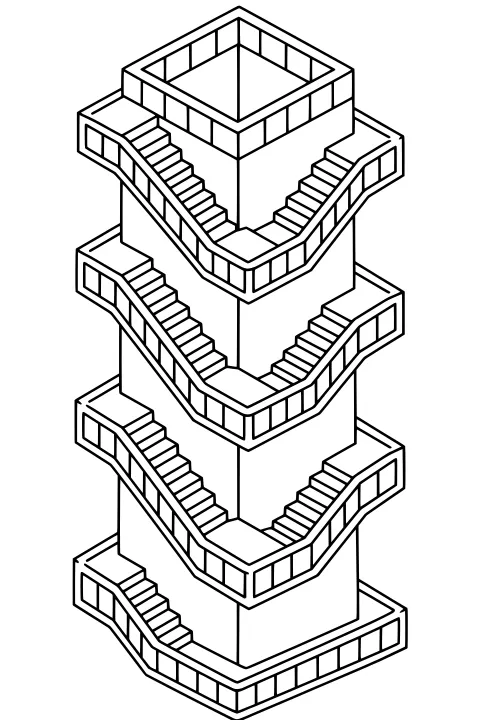
A large impossible triangle is surrounded by smaller impossible shapes, and a staircase climbs around a square tower and seems to go up forever.
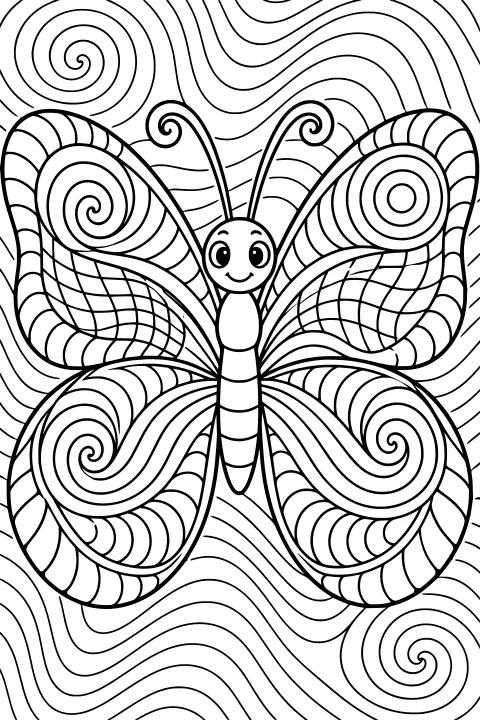
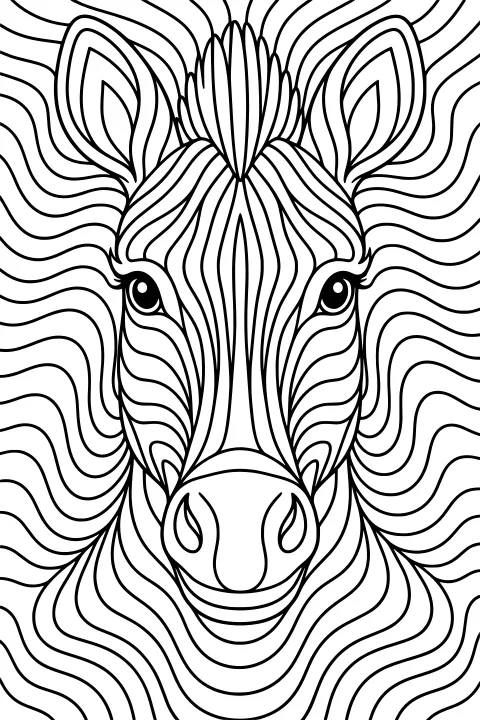
A butterfly has wings of swirling stripes and rings on a background of warped lines, and a zebra head has stripes that flow straight into the striped background.
Showing 1–24 of 24 designs. Open a preview to compare details, then download the individual PDF.
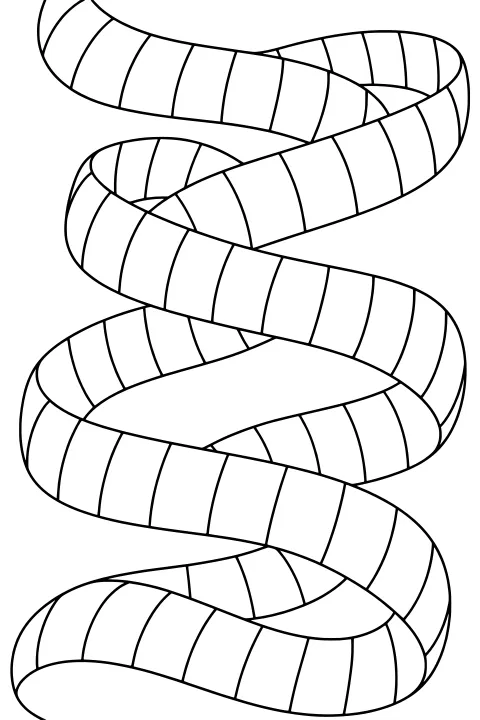
A long, segmented ribbon twists through broad loops, with overlapping sections and curved edges creating an optical illusion of depth against a plain background.
A warped checkerboard grid swells into a rounded central sphere, while curved horizontal and vertical lines narrow above and below to create an optical illusion.
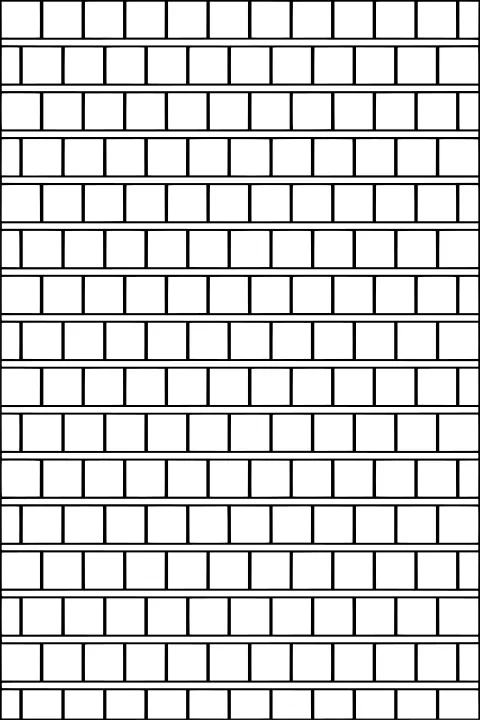
Offset rows of outlined rectangular tiles stretch across the page, separated by narrow horizontal bands. Alternating vertical joins create the staggered bricklike layout of the cafe wall illusion.
A checkered grid forms a deep square tunnel, with ceiling, floor, and side-wall sections narrowing toward a blank square opening at the center.
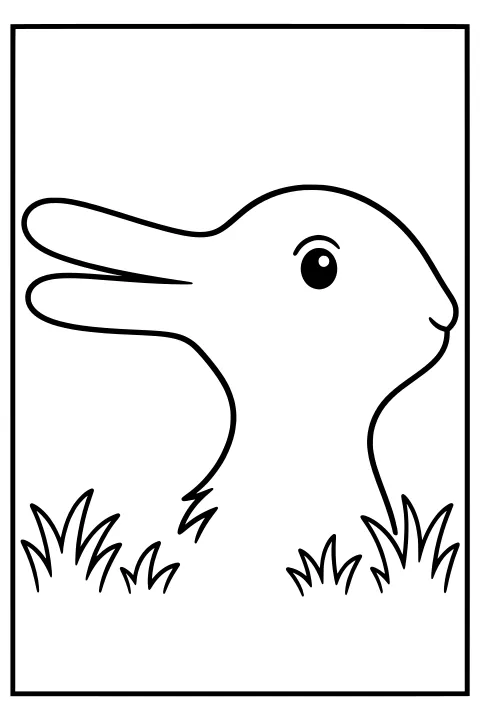
A bold optical illusion forms either a duck facing left or a rabbit facing right. The outlined profile has a large eye, a small nose curve, grass tufts below, and a thick rectangular border.
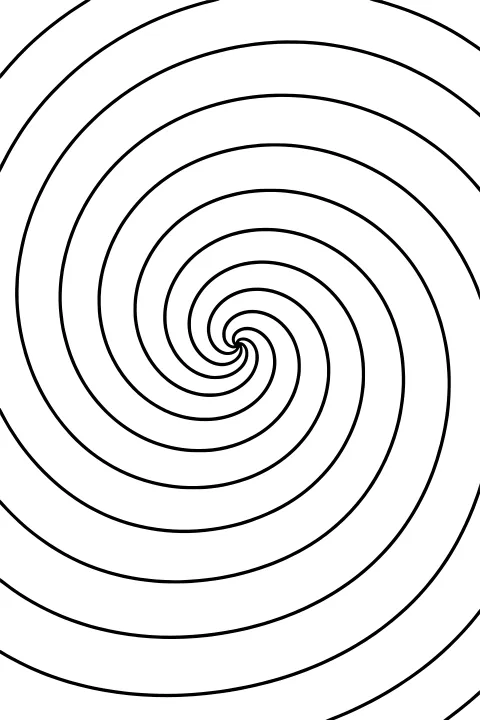
Sweeping curved bands wind from a tight central coil into broad arcs that reach beyond the edges, creating a bold optical pattern with evenly spaced black outlines.
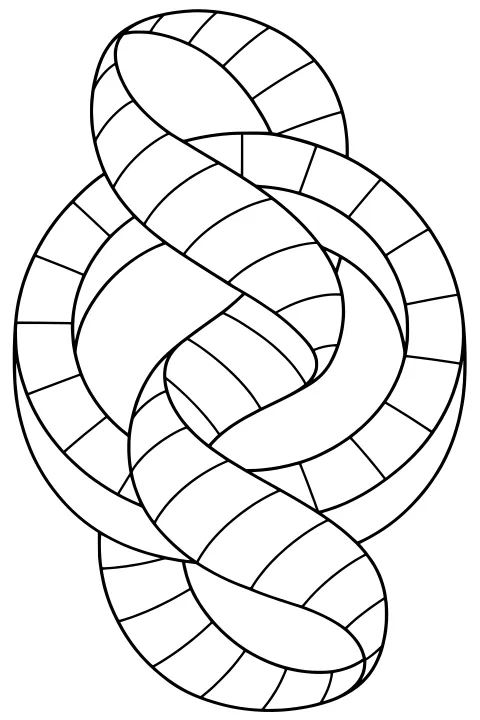
An impossible ring twists through overlapping loops, creating a continuous woven illusion. Broad curved bands, segmented edges and layered crossings form the intricate op-art design.
An impossible staircase illusion wraps repeating flights and landings around a tall geometric tower. Paneled railings, sharp corners and an open square top strengthen the optical effect.
A large impossible triangle dominates the center, surrounded by interlocking geometric forms. Cube-like frames, angular knots, loops, and diamond shapes create an op-art arrangement.
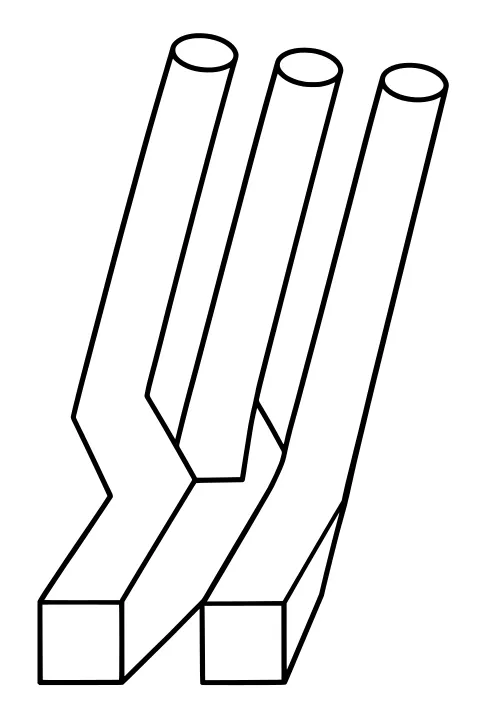
An impossible trident shifts from rounded, tube-like prongs at the top to angular supports and rectangular bases below, creating a geometric optical illusion.
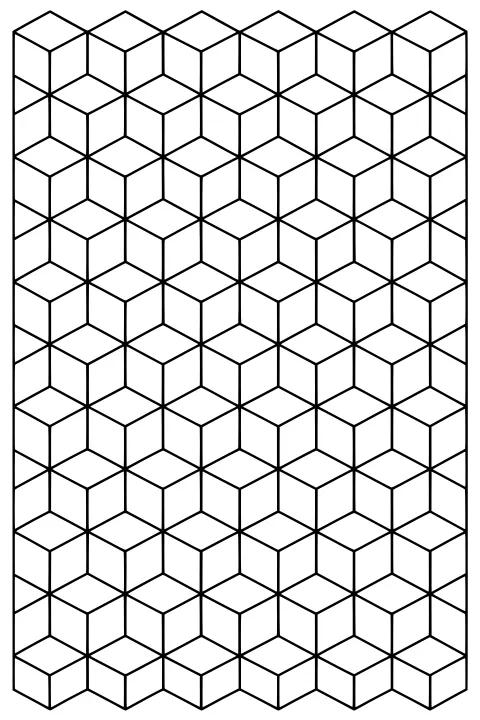
A repeating grid of outlined isometric cubes creates an interlocking optical illusion. Angled top faces and vertical side panels form a continuous geometric pattern within a rectangular border.
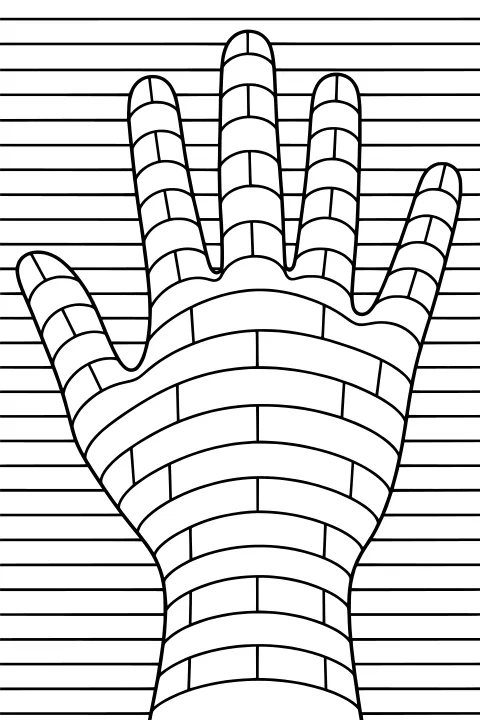
An outlined hand rises against straight horizontal lines, while curved bands sweep across the fingers, palm, and wrist. Short vertical divisions reinforce the raised optical illusion.
A butterfly fills the scene with patterned wings of spirals, curved bands, and woven lines. Long curled antennae rise against a background of flowing waves and large spiral forms.
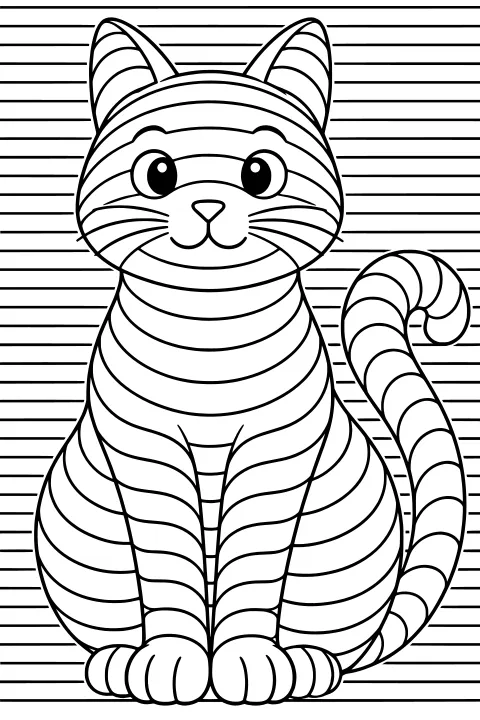
A front-facing cat sits with its paws together and tail curling beside its body. Curved bands cross the ears, face, legs, and tail, set against straight horizontal lines for an optical-art pattern.
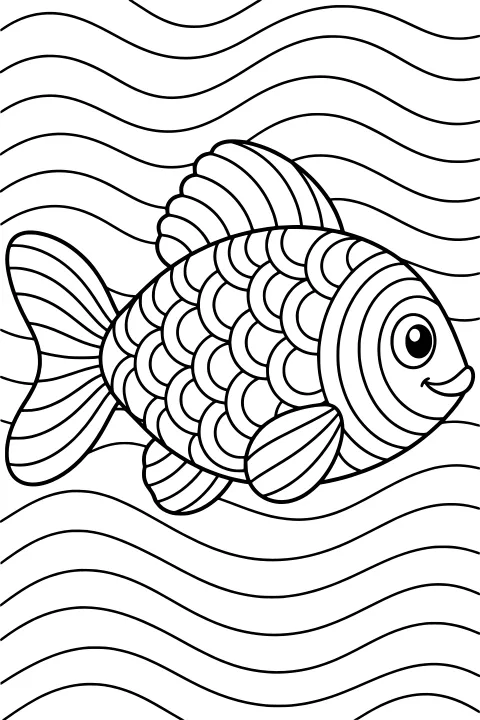
A large fish with layered scalloped scales, striped fins, a rounded eye, and curved face bands swims across a background filled with flowing wavy lines.
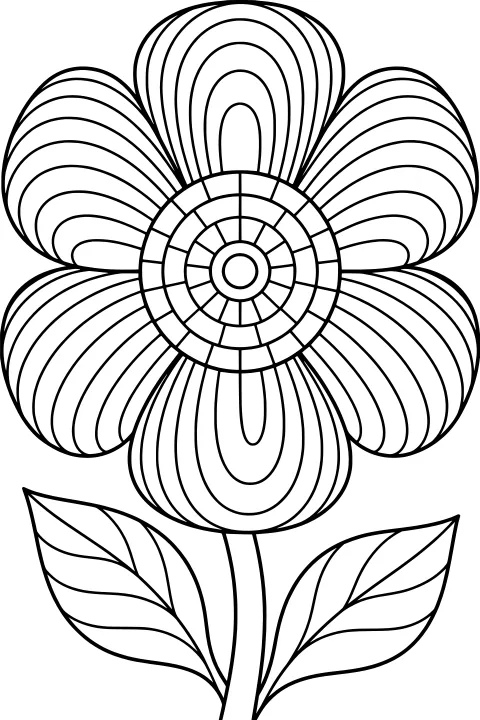
A large flower rises from a curved stem with veined leaves. Nested bands follow the rounded petals, while rings and radiating sections form a geometric center.
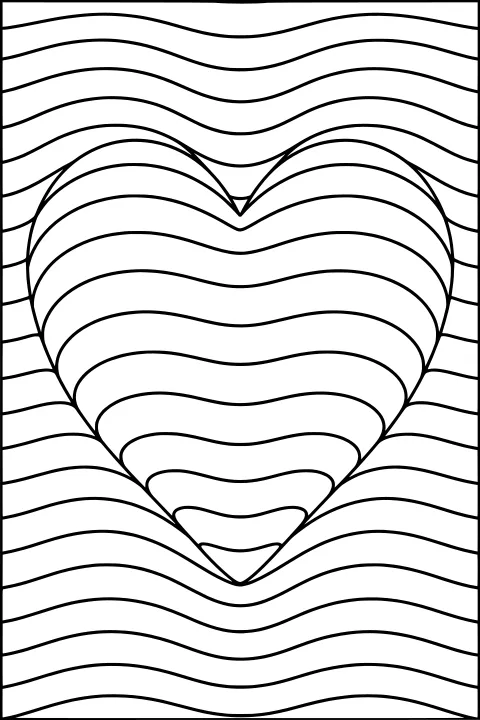
A large heart emerges from repeating curved bands that continue into a field of horizontal waves. The shifting contours create a layered optical effect around the pointed center shape.
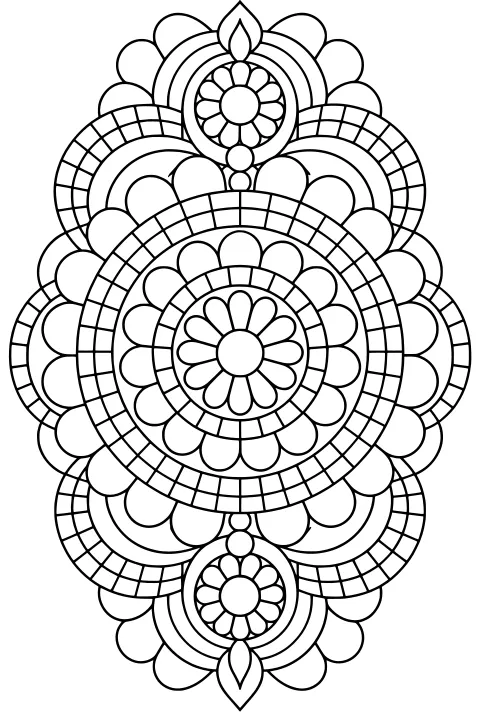
A vertically arranged mandala combines concentric flower forms, scalloped petals, curved bands and gridded rings. Smaller circular motifs and pointed leaf shapes finish the design at the top and bottom.
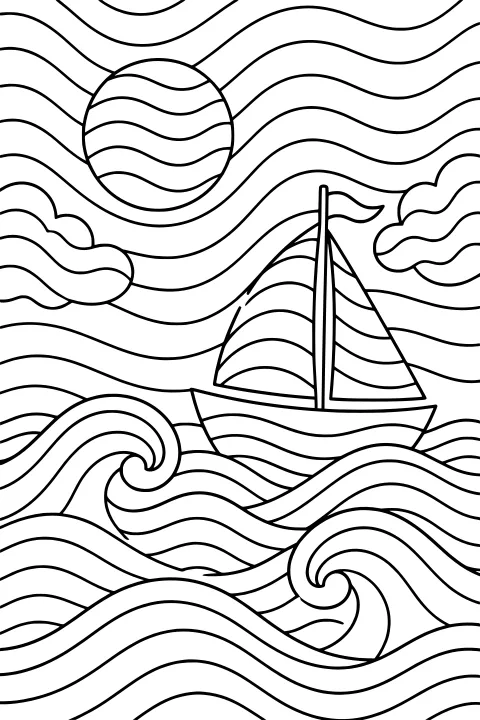
A sailboat moves among curling ocean waves beneath a large circular sky shape and rounded clouds. Repeating curved bands flow across the sails, hull, water and background.
A front-facing zebra head fills the frame, with flowing stripes across the forehead, cheeks, ears, and neck. Wavy contour lines surround the face and create an op-art pattern.
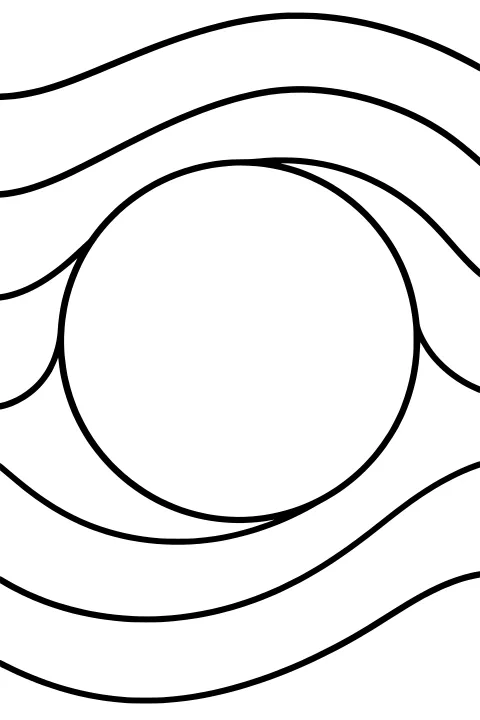
Flowing stripes bend across the page and curve around a large central circle. Broad bands and narrow gaps create an abstract optical pattern with sweeping contours.
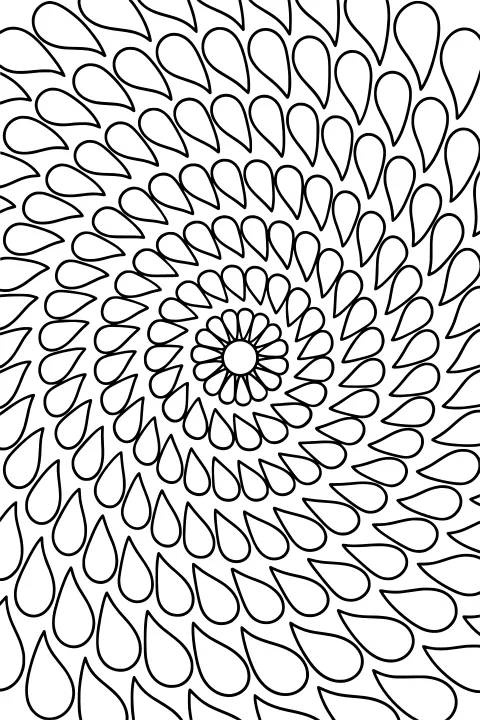
Sweeping bands of teardrop-shaped loops radiate from a round center, curling across the page in an optical pattern that suggests spinning motion.
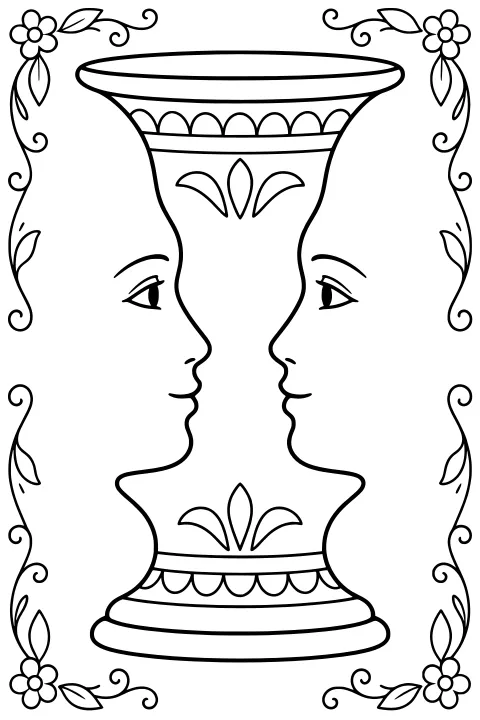
An ornate central vase doubles as the negative-space outline of facing profiles, complete with eyes and brows. Scalloped bands, petal motifs, and curling floral vines frame the optical illusion.
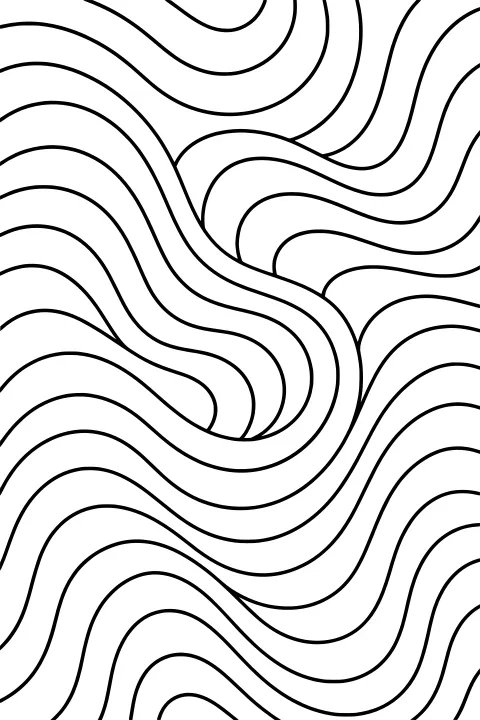
Parallel wavy stripes sweep across an abstract design, bending around layered curves and a tight central loop to create a flowing optical illusion.
Op art works best with strong contrast. Pick two colors, such as black and white or navy and yellow, and fill neighboring bands or cells in turn so the illusion appears.
Color half of the bulging checkerboard in two colors and leave the other half white, then step back and compare which half looks more three-dimensional.
Show the vase-or-faces and the duck-or-rabbit pages to someone else and ask what they see first, then color each version in a different color to show both answers.
Each picture is an individual vector PDF. Print on US Letter, or choose “Fit to page” for A4. Try one copy first to check the margins.
Explore another collection: Geometric Patterns coloring pages · Abstract coloring pages · Zentangle coloring pages · Complex Mandalas coloring pages.
The impossible triangle, the impossible trident with round prongs that turn into square bars, the impossible ring and the staircase that climbs around a tower forever are all shapes that look solid on paper but could not be built in real life.
See: Impossible Triangle Illusion · Impossible Trident Illusion · Impossible Ring Illusion · Impossible Staircase Illusion
Most op art works best with two strong colors used in turn: fill one band or cell, skip the next, and repeat. On the bulging checkerboard, the wavy stripes and the checkered tunnel, alternating light and dark is what makes the page seem to move or bulge.
See: Bulging Checkerboard Sphere Op Art · Wavy Stripes Optical Illusion · Checkered Square Tunnel Illusion
Yes. A cat, a fish, a butterfly and a zebra are each filled with curved op art stripes and rings, so the animals seem to bulge or melt into the striped background around them.
See: Op Art Cat · Op Art Fish · Op Art Butterfly · Op Art Zebra
Free to print? Letter or A4? Classroom use? See the FAQ.